
Installation: Once Vs. Every Year
Traditional strands go up in November and come down in January — every single year. That means ladders, clips, extension cords, and a weekend or two of work, or paying an installer each season.
Permanent lighting is professionally installed one time. Mounting and routing follow the selected equipment and your exterior. Once installed, supported settings can change the display without hanging strands again.
Convenience And Seasonal Use
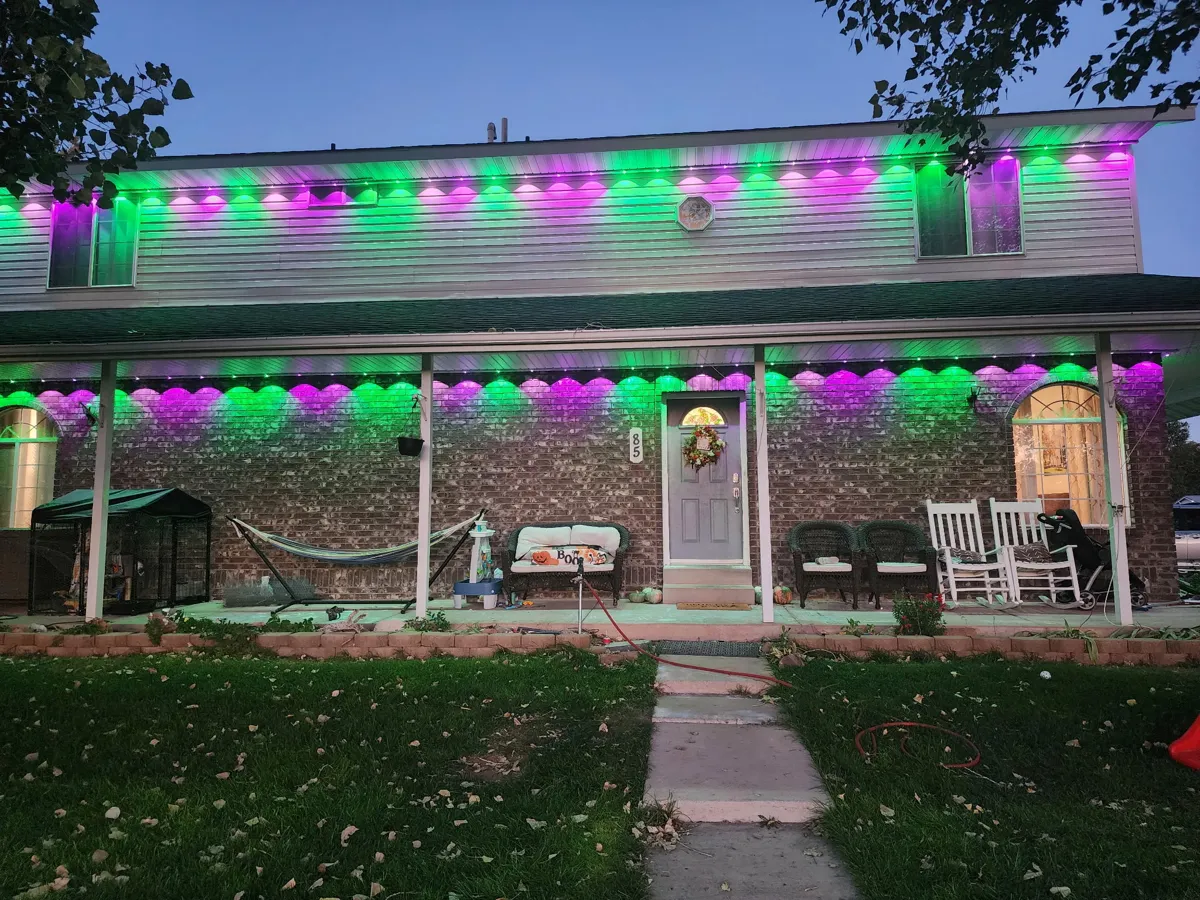
This is where the two options diverge the most. Traditional lights do one job: they look like Christmas for six weeks. Permanent systems do Christmas just as well — classic warm white, red and green, candy-cane patterns — and then keep working the other ten months of the year.
Halloween, Independence Day, game days, and everyday warm-white accent lighting all come from the same installation. If you only ever want lights in December, traditional strands remain a reasonable choice. If you like the idea of using them year-round, permanent wins on convenience by a wide margin.
Maintenance And Upkeep
Traditional strands degrade in storage and in the sun; bulbs fail, wires tangle, and most homeowners replace sets every few years. Permanent systems are built for outdoor exposure and stay mounted, so there is no annual untangling ritual.
Permanent systems can still need occasional service — a section repair or a controller update — which is why we provide warranty and service support for the systems we install.
Honest Pricing Considerations
We won't pretend permanent lighting is the cheaper option on day one — it isn't. A professional permanent installation is a real investment, priced by roofline length and complexity, while a few boxes of strands cost very little.
The comparison shifts over time: repeated seasonal installation fees, replacement strands, and your own weekends add up. Whether that trade-off makes sense depends on how long you'll stay in the home and how much you value never climbing a ladder again. We're happy to talk through real numbers for your roofline in a free estimate — no pressure either way.