
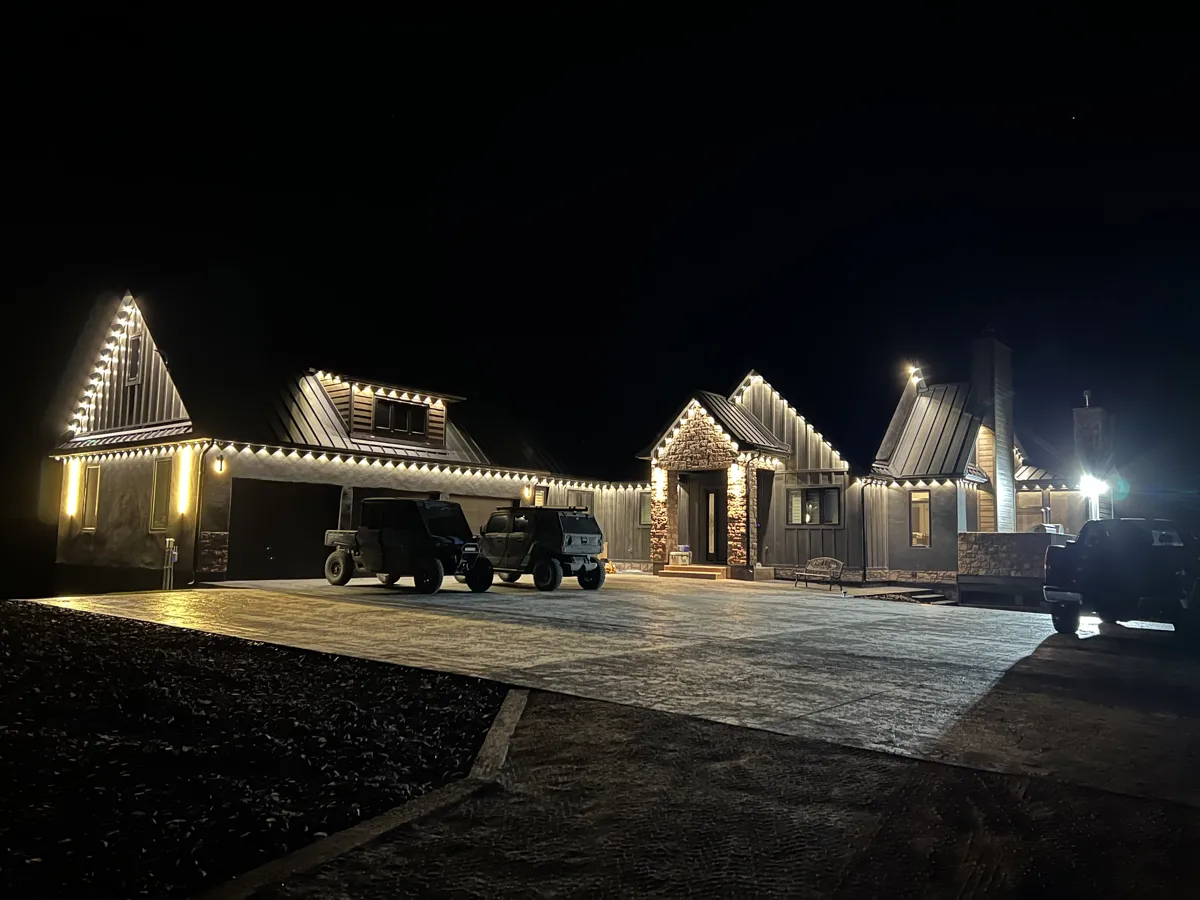
Start With The Architecture
The best-looking installations follow the home's existing lines. Gables, dormers, and roof peaks are the features that give a house its character, and outlining them in light makes that character visible from the street at night.
During planning we walk the property and identify which lines matter most. A simple ranch might call for one clean horizontal run; a two-story with multiple gables benefits from tracing each peak so the roofline reads as a complete shape.
Placement Makes The Difference
Mounting position and fixture style should be reviewed against the eaves, surfaces and windows on your property. Even spacing and clean corners are what separate a professional look from a DIY strand.
Color temperature matters too. Warm white flatters brick, stone, and stucco — the most common exteriors in Southern Utah — while cooler whites suit some modern designs. With an app-controlled system you can preview both on your own home before settling on a default.
Year-Round Applications
Once the track is up, the exterior works for every occasion. Most homeowners settle on a warm-white nightly look, then use color for holidays, family events, and game days.
That means the investment improves your exterior every single night — not just during the weeks you'd bother hanging temporary lights.
- Everyday warm-white architectural accent
- Holiday color themes without re-installation
- Soft accent lighting for evenings outdoors
- A finished, maintained look that helps curb appeal
Planning Your Roofline Project
A good plan covers roofline length, stories and peak count, power access, and which system fits your goals. Lifted Lights installs Govee Pro, Pixel, and Strata systems, and we walk through all of it during a free estimate.
For a deeper look at what's involved, see our roofline planning guide, or browse real results in our project gallery.